In recent years I’ve heard some “experts” on TV say you should eat light on Thanksgiving so you don’t become obese. First of all, that’s stupid, and second, the research doesn’t support such tomfoolery. According to a study, the average weight gain for the holiday season (including Thanksgiving, Christmas, and New Year’s) is just 0.8 pounds. That’s not a typo. For all the hype from the media outlets, you’d think people were becoming instantly obese from a couple of big meals. 0.8 pounds is nothing — you can gain that just from eating normal, or if your regularity is not as regular. I figured the number would be higher, given the big holiday meals, the extra cookies, and the parties.
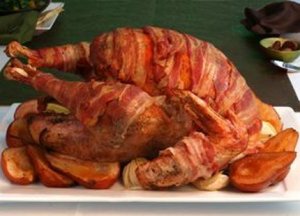 Obviously some Thanksgiving meals are more fattening than others, but a traditional feast shouldn’t be that bad. I figure a normal Thanksgiving dinner wouldn’t be more unhealthy than some of the things you can get at restaurants, particularly all-you-can-eat buffets. Plus you might be eating less processed food, which could make it healthier.
To diet on Thanksgiving day and Christmas day is foolish, if you want my opinion. It’s hard enough to diet and eat right, particularly if you enjoy eating. To miss out on the most special meals of the year would be depressing. If you’re seriously trying to lose weight, one way to approach it is to eat healthier in the days leading up to the big meals, to rationalize eating a lot at the family get-togethers and parties.
Of course, common sense disclaimers apply. For example, if you’re on the verge of a heart attack or some other severe health problem, maybe you shouldn’t eat a huge meal, but in that case, you should do something about it NOW.
Let’s get back to the study, if I may rant for a minute. The health “experts” shouldn’t try to make people feel bad during the holidays if the research shows that the holiday eating isn’t the problem. Here’s what irked me most about the article:
In the study, 14% of overweight and obese individuals gained more than five pounds during the holiday. In the abstract, the researchers wrote, “holiday weight gain may be an important contributor to the rising prevalence of obesity, even though absolute values for weight gain in this study were less than anticipated.”
Okay, so obese people gained more weight than average. That’s not exactly breaking news, since they’ve obviously been gaining weight before then, so they’re just continuing the trend. But notice the quote from the researchers, which basically says they’re still sticking to their hypothesis even though the statistics don’t support it. Hopefully some people were reprimanded over that kind of junk.
So in conclusion, don’t feel bad about eating a few big meals during holiday feasts and parties. The obesity problem isn’t caused by a couple of big meals here and there. (Shouldn’t that be common sense?) And the next time a news person on TV says to cut back during the holidays, eat another piece of pecan pie… or pumpkin pie… or cookies… you get the idea. 🙂 Eat, drink, and be merry.

 Buffet o' Blog