making diamonds from peanut butter
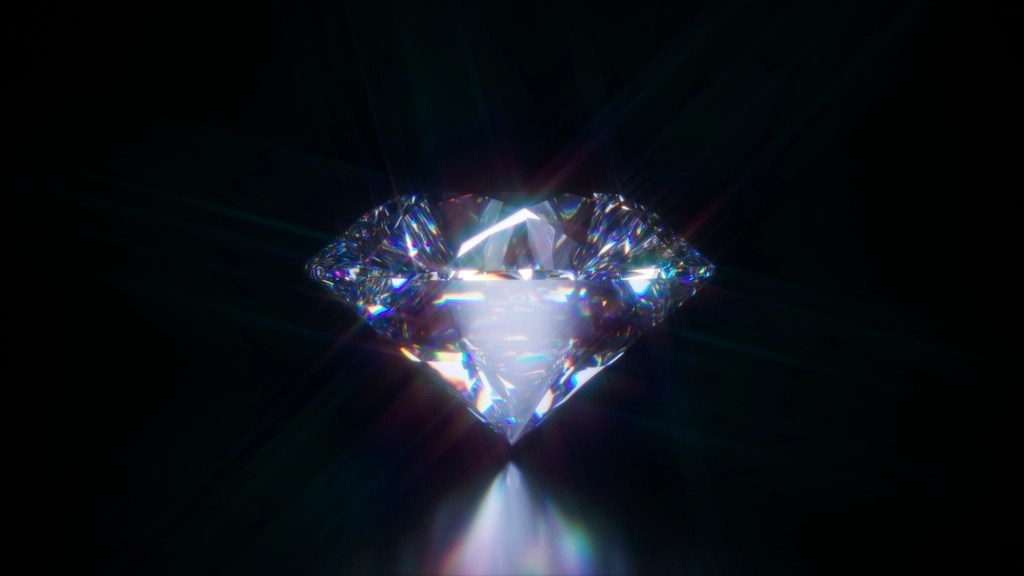
That subject sounds like something I might just make up and write about to be silly and random. But it’s actual science! Someone has actually done this!

The article explaining this starts out in a really interesting way:

Every so often, Dan Frost hears a dull thud and his office floor vibrates. It can only mean one thing: one of his experiments has exploded again. Making his way downstairs to his lab, he finds the shock is written on the faces of his colleagues still in the lab. … The odd explosion is part of the job.

Sounds like fun! Well, until it isn’t. Explosions are interesting, until they destroy things, which they are apt to do. But sometimes that’s the cost of figuring things out.

The reason for the explosions is that his team is trying to mimic the forces of Earth’s lower mantle thousands of miles underground. That is where diamonds are formed naturally. Their machine uses a piston to squeeze crystals at up to 280,000 times atmospheric pressure. To put that in perspective, your body wouldn’t do well at anything above 30 atmospheric pressures (atm). You would need a special suit and a special source of air to survive above that, because the air density changes and weird things happen. But I digress…

The second part of the process is using an anvil made of diamonds to squeeze the crystals with 1.3 million times atmospheric pressure. It uses sound waves traveling through the crystal to determine whether it is similar to the composition of the mantle, by comparing it to known seismic waves travelling through the Earth.

His experiments have led to some unexpected data about the composition of the Earth’s mantle and that there may be “oceans” of water hidden deep in the mantle. He has also learned how to make diamonds. It won’t make him rich — it takes a lot of time and energy for this process, more cost than the diamonds are worth. But it does have real-world applications in other fields.

As for converting peanut butter to diamonds, he has tried various sources for ingredients. A German TV station asked him about using peanut butter, so he tried it and it actually worked, but then “a lot of hydrogen was released that destroyed the experiment”. The article doesn’t explain what that means. Were the diamond destroyed? If so, that’s some explosion!

You could say that he made peanut butter explode. πŸ™‚ Isn’t science interesting?

Are you ready for smart underwear?

Some researchers have invented smart underwear that monitors your flatulence. Side note: This conversation could go a couple of different ways, so let’s explore both! πŸ™‚

On the serious side, this is actually helpful. Scientists can learn a lot about people’s gut health based on their flatulence, and up until now it was difficult to study. It has been attempted, but it involved “extremely invasive techniques”, and the less said about that the better! Now, with smart underwear, people can easily submit information about their microbiomes to scientists. It contributes to a research study called the Human Flatus Atlas. It tracks the amount of farts per day and the hydrogen content. Did you know your toots are made of mostly hydrogen, carbon dioxide, and nitrogen? Methane is also in the mix, but less common.

The first group test with this new underwear included 19 healthy participants, and it found that the average number of farts per day was 32, ranging from 4 to a maximum of 59. While 59 is a rather large number of farts for one day, I had a college roommate who once passed gas over 100 times in a day. It was so excessive that he actually counted them. And I believe him, because I unfortunately had to witness some of that. I don’t know what he ate to enable that superpower.

Someone had told me about this smart underwear, so I searched for info on it, and one headline said, “Everyone does this. But how much is too much? Scientists want to know.” The article started out with: “Whether you call it breaking wind, sounding the trumpet, or cutting the cheese, everyone farts. But how much gas is too much? The short answer: no one knows – yet.” It’s safe to say that 100+ is too much for one day. Not only was something unusual going on with their health, but probably everyone around them!

Is this topic gross? To some, yes. But as another article said:

Whether you’re breaking wind, farting hard or just letting out a quick toot, flatulence is — whether you want to admit it or not — as much a daily necessity as breathing.

So while it is necessary, some people don’t like to talk about it. That’s fine. If you are one of those, you should probably not finish the rest of this post. You have been warned. πŸ™‚

On the lighter side, this invention could be used for fun! For people who enjoy farting, there could be a competition setting. Someone could create a way for friends to have a leaderboard. The results could be uploaded to a shared site or sent via text. The smart underwear could track the number of times, the loudest volume, and the most stank. Obviously this isn’t for everyone, but I guarantee there are some people who would enjoy making it competitive.

Changing Daylight Saving Time Might Reduce Obesity

I knew it was because of Daylight Saving Time that I’m overweight! I just knew it! Okay, perhaps that’s a slight embellishment. My slightly-more-than-ideal weight might be partly due to what I eat and how much (or not much) I exercise. But according to a new study at Stanford University, if our government gets rid of Daylight Saving Time, it could provide incredible health benefits:

The researchers estimate that permanent standard time would prevent about 300,000 cases of stroke per year and reduce the number of people with obesity by 2.6 million, compared to biannual changes. Permanent daylight saving time would also be positive, although with a smaller impact.

So it’s the changing of time that matters, and to some degree, having more daylight. So apparently even if the government never changes the system officially, one could just ignore the time change and be less fat. Works for me! I could switch my sleep habits an hour if that helps me be less overweight. That would surely be easier than eating healthy and exercising more! πŸ™‚

So far I’m having fun with this. However, it is an actual scientific study, and they used mathematical models to simulate this, trying to find the impact of time policies on light exposure and circadian rhythm (your body’s internal clock). But I’m skeptical. Normally I’m all for the use of math and the scientific method, but I think those numerical claims are vastly exaggerated. There might be a real benefit — I’m not arguing that — but preventing 2,600,000 cases of obesity? Whatever.

If we’re not going to change Daylight Saving Time, I’ve got some ideas to improve it, which I’ve discussed before: a better way to fix Daylight Savings Time. Most people would be for one of those plans, I think, but so far it has been ignored.

As far as reducing obesity in America (which is a big problem), I wish changing the clock would be a solution. But I think the best solution is still eating less and exercising more. That strategy is no secret, but perhaps we need a fresh approach to promoting it… (I have an idea, which will be in a future post.)

Could time travel remove itself?

Do all time travelers drive a DeLorean? Seems unlikely, although it was cool.

I doubt that time travel could ever really happen. But some scientists like to ponder it, and I agree it can be interesting to think about. There are many paradoxes that it creates. A new hypothesis is that if time travel ever gets invented, that it would create its own destruction by introducing instability into certain realities which would eventually lead to the most stable possible timeline — that is, one without time travel at all.

It’s true that time travel would definitely create instabilities. People would go through history and wreck it, whether for their personal gain or just for fun or to be malicious or even without trying to. Facts and historical events would get altered, which would change the future. But with multiple people changing the past, they could create a future that cannot exist due to being incompatible with itself. The universe automatically makes things be in balance. We’ve defined this as the laws of thermodynamics. Objects will return to their most stable state, to keep equilibrium. So by that reasoning, it’s possible that even if time travel were to exist, it might lead to a future where it cannot exist. That leads to a paradox which might make your brain hurt if you try to understand it. πŸ™‚ If it removed itself, would we forget about it and keep reinventing it? Wouldn’t that cause some distortions in the time-space continuum? What if someone somehow created a future that required time travel to exist? Would our universe just go poof?

BTW, the article linked above is called “Where Are All the Tourists From 3025?”, which seems like a good title for a book…

Bonus: Time travel becoming confusing reminds me of several episodes of Milo Murphy’s Law, which is an awesome show if you don’t know. Don’t think it’s just a kid’s show because it’s animated. It’s clean and family-friendly, but hilarious and full of parody references and inside jokes. And the lead character is voiced by Weird Al Yankovic, who does a great job with it. Part of an ongoing side story in the show involves two time travelers, who see a lot of clocks in the timestream. One of them says the clocks was probably someone’s idea of a joke. I don’t want to spoil it, because it’s fun to see how it all plays out, but if you just want to know without watching, click here and look for “Floating Clocks” (which is a common trope for showing that time travel is happening, and here they explain it… kind of). Or, if you want to see just that clip: Clocks in the timestream. (It’s a weird clip to start with though, because most episodes are more realistic and don’t involve alien pistachios.) There’s another time travel paradox in this episode involving a letter someone put in the past for their future self. (Think about that one.) There’s also a peach paradox in the show, and there’s a video clip of it on that page.

Anyway, that’s a lot of rambling about time travel, but you also got a show recommendation. I think it’s laugh-out-loud funny, and my kids like it, too. (It was created by the same guys who created Phineas and Ferb, which is another great show I recommend.)