Is a taco a sandwich?
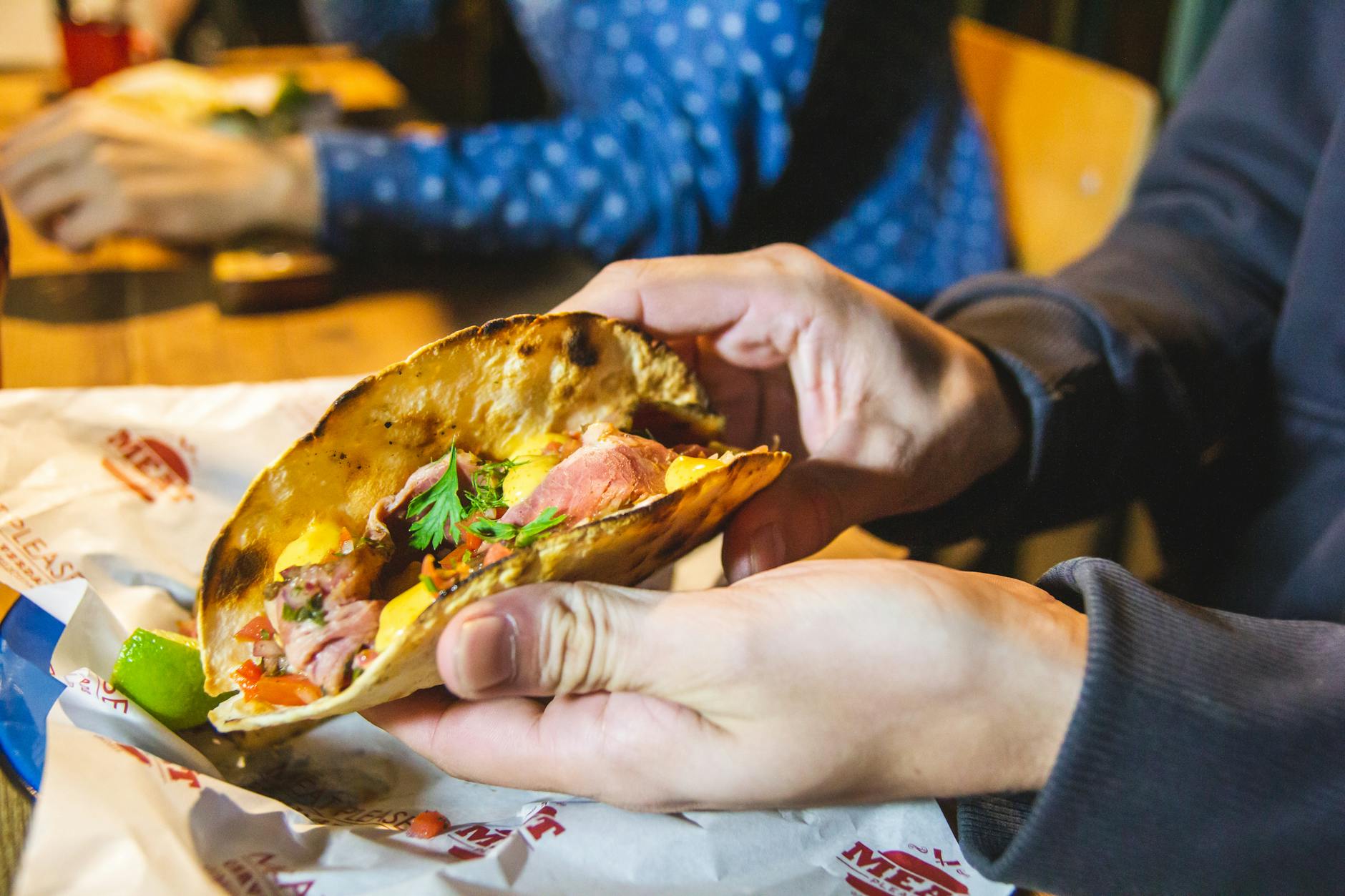
In the last post we discussed whether a burger is a sandwich. This topic may seem like a trivial issue, and often it is, but the definition of a sandwich was recently debated in an Indiana courtroom where a judge had to rule whether tacos are sandwiches.

There is a zoning policy in Fort Wayne where a shopping center can’t have fast food outlets but it can have sandwich shops. A taco restaurant wanted to open but was told it wasn’t allowed. Apparently the restaurant owner was adamant about getting that location, so he took it to court. The judge ruled that tacos and burritos are “Mexican-style sandwiches”, so the taco place can open there.

So add that to your debate with friends about the definition of a sandwich. There’s legal evidence to support one side. Although personally I would not consider tacos or burritos to be sandwiches.

So let’s look at the official definition of a sandwich, according to the Merriam-Webster dictionary:

1a) two or more slices of bread or a split roll have a filling in between.
1b) one slice of bread covered with food.
2) something resembling a sandwich.
especially : composite structural material consisting of layers often of high-strength facings bonded to a low strength central core.

That last definition seems problematic. I figure it’s referring to a generic use of the term for non-food items, but it doesn’t seem like a valid definition to say if something looks like a sandwich then it is. Perhaps they should clarify it as non-food usage. But I’m no etymology expert.

Also, back on topic, the first definition seems legit, but it does not include tacos or burritos, unless you are going to argue that a taco shell or tortilla is bread. I’m not prepared to go that far.

The second definition (1b) doesn’t work for me. If you accept that, then pizza is a sandwich. That stretching it too far.

Who knew it was so difficult to decide what a sandwich is? That’s what makes this a potentially fun conversation with your friends.

Is a burger a sandwich?

If you’re with a group of friends and looking for something to discuss, here’s an idea. Also, this works particularly well at a restaurant, since it’s about food. You could start the discussion with the premise of, “I heard something unusual and want to get more opinions on it.” Then ask:

“Is a cheeseburger a sandwich?”

Then just sit back and watch… πŸ™‚

It’s obviously a simple question, but it often provokes debate. One could argue that it’s just meat and cheese and toppings between slices of bread, which is what a sandwich is. The counter argument is that it’s grilled food, so it’s not just a sandwich. Also, it just seems wrong to call it a sandwich. They seem like different categories of food.

Someone may argue that a sandwich is made with sliced meat, deli-style, which seems like a valid point. However, many restaurants sell a chicken sandwich which has fried or grilled chicken. If someone claims the chicken sandwich is mislabeled, then ask if it’s a chicken burger. πŸ™‚

FYI, according to an official definition at Britannica, a burger is a sandwich, but feel free to draw your own conclusions.

If the topic was fun to discuss, follow it up with, “Is a hot dog a sandwich?”

building the biggest empire in the world

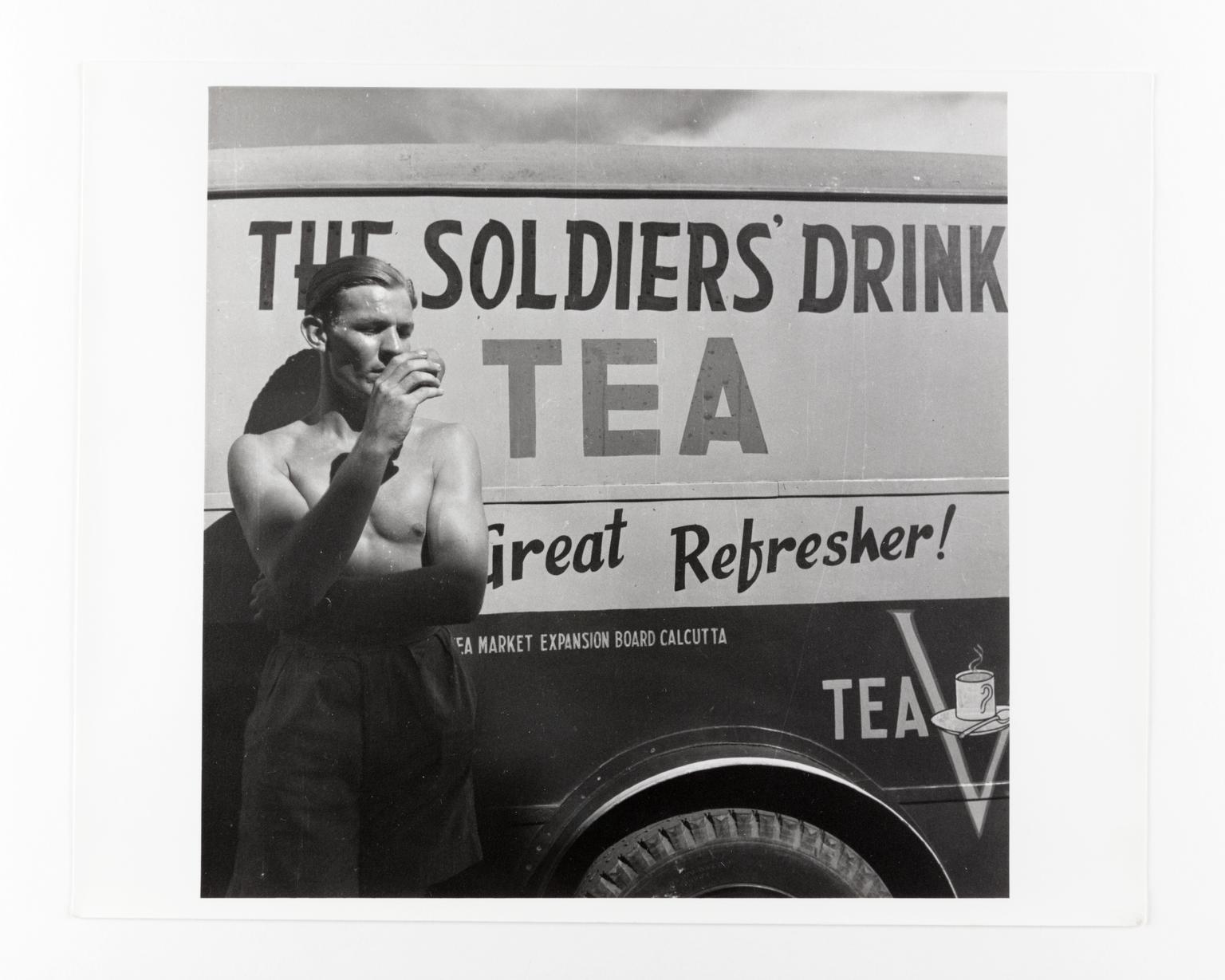
Some historians say the British Empire was once the largest empire of all time, even larger than the Roman Empire. One of my friends said this was because they drank a lot of tea.

I don’t know if this hypothesis can pass mustard*… [Ed. note: What does mustard have to do with tea?!? Nvm, see the explanation below.] But let’s consider the possibility. (After all, sweet tea is awesome, arguably the best drink out there.)

So if tea gave them so much world-conquering power, what happened? Obviously their empire is not so large now. Well, once their influence spread around the world, everyone knew about the wonders of tea and so there was more balance. I suppose that could explain that part. That’s good enough for me. (Further debate is beyond the scope of this article, but feel free to comment if you have more insight.)

Disclaimer: if you are a student in school, your history teacher may not know about this theory. So ask them about it before putting it as an answer on your homework or tests. If they tell you otherwise, go with their answer. As Bart Simpson once had to write many times on the chalkboard, “I will not expose the ignorance of the faculty.” πŸ™‚

* This is an eggcorn**. The saying is supposed to be “pass muster”, which originally referred to a military inspection. I misquoted it on purpose to be funny, but if you don’t know the original, it’s probably not funny. (But it is still random, regardless, so there’s that.)

** I just learned the word eggcorn. How have I not heard of this before? I enjoy occasionally misusing words and phrases (for humorous purposes), so I’ve been using them for years without knowing what they were called. Why didn’t I learn about this in school?*** Anyway, an eggcorn is a misunderstanding or mishearing of a word or phrase. Some common examples are “mute point” for “moot point”, “ice tea” instead of “iced tea”, “I could care less” which means you do care, “intensive purposes” for “intents and purposes”, “escape goat” for “scapegoat”, etc. But sometimes phrases are improved by eggcorns, like “chomping at the bit” instead of “champing at the bit”, and “free reign” instead of “free rein”. (Here’s a link for more about eggcorns.)

*** So I looked up the origins of the word eggcorn, and it was invented in 2003 when someone asked a linguist why some people say “egg corn” instead of “acorn”. He suggested calling that type of word/phrase an eggcorn, and the usage has become proper, with eggcorn being added to the Oxford English Dictionary in 2010. So that’s why I hadn’t heard of it — it hasn’t been around that long. Also, it’s similar to a mondegreen, which usually applies to misheard song lyrics.

So now you know… and knowing is half the battle.

Why am I the cat’s pajamas?

A friend recently heard the final version of an album I mixed for him, and he replied with the phrase, “You sir, are the cat’s pajamas!”Β  I’ve heard the phrase before, and it’s supposed to mean good things, but thinking about it, that’s a very strange phrase.Β  I asked the Buffet o’ Blog staff to interpret / interpolate it, and here is one of the replies.

I think the “cat’s pajamas” is a very versatile phrase.Β  Using the magic of language, I’ll break the phrase down to its base parts.

The base words, cat’s pajamas, can mean the following:
* Pajamas? On a cat? It’s both useless and annoying!
* Pajamas! For cats! That’s the best idea I’ve ever heard!
* Pajamas, for cats? That’s the stupidest idea I’ve ever heard!
* Pajamas, for cats. Why not?
* Cats pajamas: Made from real cats.
* Cat’s pajamas: Made for real cats.

The modifier, sir, can mean:
* A medieval knight.
* A formal language substitute for bub, buddy, bro, homie, guy, etc.

The rest leaves us with “you are (the)”, which modifies the pajamas.Β  (You’d think that would be a seamstress, but no.)

Thus, the phrase means: (paraphrased for explanations)
* (anger) Hey buddy, I’m going to make you into some pajamas for my cat.
* (male) Bro, you are as unnecessary as pajamas on a cat.
* (female) That guy makes me think of those clothes I dress small animals in.
* (strange) That knight is wearing armor made of cats!
* (possessive) Bub, you are similar to an item of clothing owned by a feline.
* (Impressed) Wow, you remind me of cat pajamas, which allowed me to finally shave cats and then dress them so they won’t get cold.

You sir! ARE the cat’s pajamas!Β  And I STILL don’t know what that means.Β  πŸ™‚